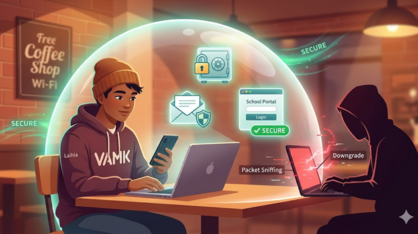
Cybersecurity means keeping systems, networks and programs safe from digital attacks. In practice, however, it is something most people deal with every day without really noticing it. On a personal level, it involves keeping your passwords, messages, files and banking details safe. For many, it becomes more relevant when logging into a service or spotting a suspicious email.
More than just passwords
At the same time, cybersecurity has a much bigger role in industrial environments, where digital systems control physical infrastructure like electricity distribution and data centers. From what I have seen, even a small weakness in these systems can lead to bigger consequences than expected. It is also important to understand that not every cyber threat can be fully prevented. The goal is more about reducing risk than eliminating it completely. That is why cybersecurity should be treated as an ongoing process rather than a “one-time solution”.
The human element and the 2025 Poland attack
When cybersecurity fails, the consequences are not just theoretical. On an individual level, the most common problems are still simple mistakes. People reuse passwords, click suspicious links, share sensitive information or download files without thinking too much about it. These small mistakes can lead to stolen accounts or locked data.
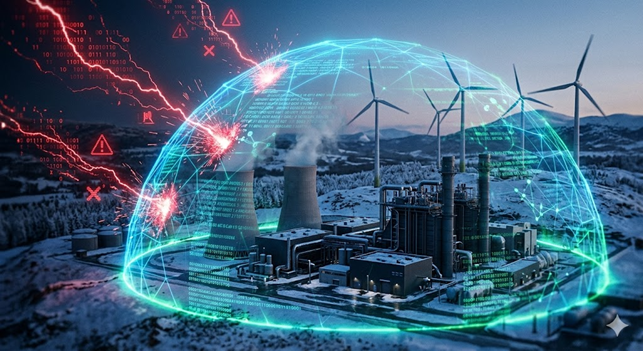
What makes this more worrying is that similar basic issues can appear in industrial environments as well. A concrete example comes from a 2025 incident reported by CERT Polska. On December 29, 2025, attackers targeted Poland’s energy sector during freezing winter conditions and gained access to multiple systems. This happened partly due to reused credentials and missing protections like multi-factor authentication. In other words, systems were left far more exposed than they should have been.
DynoWiper: Destruction over ransom
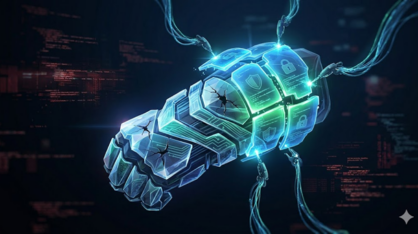
In this same attack, the attackers used DynoWiper to destroy data inside compromised networks. Instead of stealing files or asking for ransom, the malware simply corrupted them so they could not be recovered. The attack affected over 30 wind and solar farms, as well as a large combined heat and power (CHP) plant that provided heating for a significant number of people.
What makes this case important is that the malware itself was not extremely advanced. The real damage came from the fact that attackers had already spent significant time lurking inside the systems, understanding how they worked, before launching the final attack.
The ripple effect of cyber threats
The effects of cybersecurity problems are often not visible until something actually happens. For an individual, this can mean losing access to accounts or having personal data stolen. Even a small mistake can take a long time to fix. On a bigger scale, the consequences can be catastrophic. In the Poland case, the attackers aimed to disrupt energy production, showing how these attacks can affect the basic services regular people rely on. Even as a student using online platforms, we must remember that those services depend on stable infrastructure running smoothly in the background.
Defense in Depth: How Security Actually Works
At the same time, cybersecurity is not only about problems. When it is done properly, it makes systems more stable and reliable. On a personal level, simple habits can already make a big difference, such as using different passwords, enabling two-factor authentication, keeping software updated or regularly backing up important files.
In bigger systems, protection is built in layers. Networks are separated, access is limited, and activity is continuously monitored. In the very same 2025 incident in Poland, some systems were actually successfully protected because security tools detected unusual file activity and stopped the malware before it could fully execute. This shows that even if an attacker gets in, the damage can still be limited if the right defenses are in place.
Conclusion
In the end, cybersecurity affects both individuals and society. No system can ever be completely secure. However, it is possible to make attacks harder and to limit the damage they cause. The Poland case shows how small weaknesses and targeted attacks can combine to create serious problems. It also proves that good security practices can stop even destructive malware. For this reason, cybersecurity should not be seen as just a technical issue. It is a normal and vital part of using and maintaining modern digital systems.