What is Two-Factor Authentication?
The digital world has become an essential part of our daily lives. Nearly every day students use social media, email and online learning systems. Because so much personal data is stored digitally, protecting these accounts is crucial. Two-factor authentication (2FA) is one of the best ways to increase security.
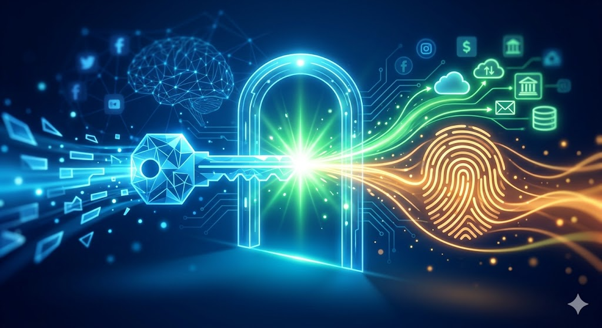
Two-factor authentication is a security technique that requires users to prove their identity in two separate ways before accessing an account. Usually, the first step is entering a password. The second step is proving your identity using another mechanism, such as a code sent to a cell phone, an authentication app, or biometric verification, like a fingerprint.
The Risks of Weak Security
Despite the obvious risks, many internet users still rely solely on passwords to secure their accounts. Unfortunately, these passwords are frequently weak, easily guessable, or reused across multiple websites. If a hacker manages to obtain or guess a password, they can easily gain access to personal accounts.
This can lead to severe consequences. Hackers may steal money, read private emails, access sensitive personal information, or utilize accounts to spread spam and scams. Passwords alone are no longer sufficient to protect accounts due to the sharp rise in cybercrime in recent years.
How Two-Factor Authentication Protects You
Two-factor authentication resolves this vulnerability by adding an additional layer of security. The system requires users to verify their identity through a second method after entering their password. For instance, before signing in, a user might receive a temporary six-digit code on their phone that they must enter to gain access.
The second verification step is necessary in order to access the account, even if someone like a hacker, managed to steal a password. Hackers find it far more difficult to access accounts as a result. To increase customer security, several well-known tech organizations, like Google, Microsoft, and Facebook, currently provide two-factor authentication to enhance user security and promote it heavily.
Benefits for Everyday Users
There are significant advantages to enabling two-factor authentication. First and foremost, it greatly enhances the security of your personal accounts. Second, it secures your private messages, academic documents, and other sensitive data.
Since several educational systems and learning platforms require login access, securing online accounts is crucial for students in particular. Although it typically just takes a few minutes to enable two-factor authentication, it significantly lowers the risk of someone gaining unauthorized access to an account.
Conclusion
As technology advances day by day, online security is becoming increasingly crucial for everyone. Passwords by themselves are no longer sufficient to shield private data from online (cyber threats) attacks. Two-factor authentication is a straightforward, practical, and highly efficient method of enhancing account security. By enabling this feature, users can take control of their digital safety and ensure their personal information is properly safeguarded.