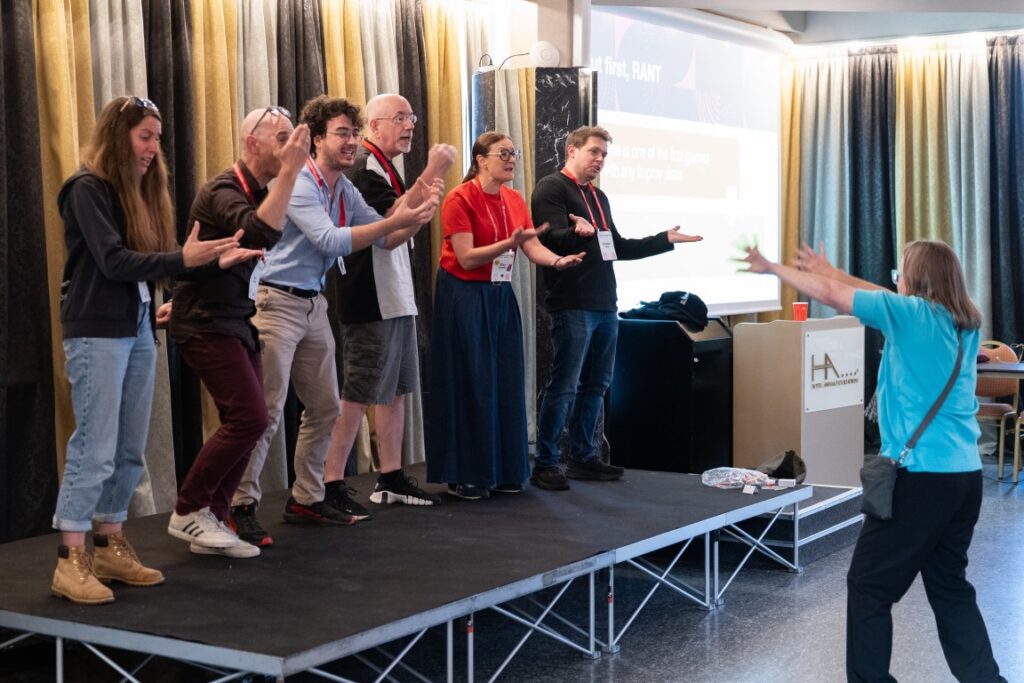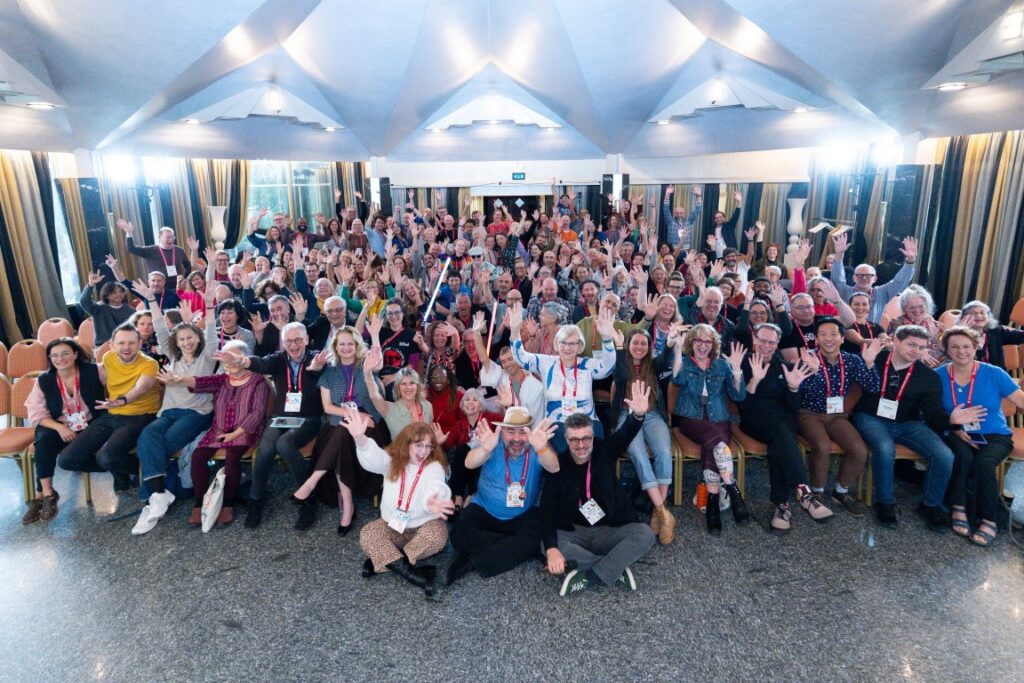
In October 2026, I participated in the Applied Improvisation Network (AIN) conference in Italy, under the theme The Art of Being Human. The conference brought together people interested in how improvisation can support human connection, learning and professional development. The wide variety of workshops and learning experiences gave me plenty of ideas that I believe could be applied not only in my work teaching business students, but also in supporting creative professionals in developing their businesses.
Creative entrepreneurship and the skills needed
The Creative Networks project, financed by Interreg Aurora, aims to strengthen the competitiveness of cultural and creative businesses in Finland, Sweden and Norway through tailored training, cooperation and business support (Vaasa University of Applied Sciences, 2026). The project seeks to implement support structures for the creative business in this area. Applied improvisation could complement this work by focusing on entrepreneurial behavior alongside more conventional business-development tools.
Thom (2016) investigated the entrepreneurial skills important to the professional success of fine artists. Building on this work, Hanson (2021) developed an Arts Entrepreneurship Profile identifying four dimensions: opportunity recognition in the arts, arts leadership, comfort with uncertainty and networking. One could conclude that creative entrepreneurship is as much about people and action as it is about business models.
Creative professionals certainly bring artistic knowledge, imagination and original ideas to their work. Yet making a living from creative expertise demands the skills defined above. However, these are not necessarily skills mastered by all creative professionals. Many of the stakeholders interviewed for the project have mentioned the different mentality of creative professionals compared to more “conventional” businesses. The drive to create is strong, but business jargon is something they find difficult to relate to.
What could be done differently?
Applied improvisation offers an interesting approach to developing entrepreneurial competencies. Through playful exercises, participants can practice listening, taking initiative, collaborating, responding to unexpected situations and becoming more comfortable with uncertainty. These competencies are closely related to those identified in arts entrepreneurship research (Hanson, 2021; Thom, 2016).
In the Creative Networks project, I see opportunities to explore these methods in two ways. First, by helping creative professionals develop confidence and entrepreneurial skills in a more experiential and approachable way. Second, by helping business advisors strengthen their listening, empathy, communication and creative thinking skills, enabling them to better understand the needs and motivations of creative entrepreneurs and explore new ways of supporting them.
After all, supporting creative entrepreneurship should not be about expecting creative professionals to adapt to conventional business thinking. Perhaps both sides could benefit from becoming more creative, open-minded and willing to step outside their comfort zones.
Creative Networks – for Growth and Digital Transformation (2026–2028) is an Interreg Aurora-funded project supporting the competitiveness and sustainable growth of cultural and creative businesses in Finland, Sweden and Norway. The project focuses on strengthening business support services, developing entrepreneurial and digital skills, and promoting cross-border collaboration. The project is led by eXpression Umeå, with Vaasa University of Applied Sciences (VAMK), the University of Oulu/Kerttu Saalasti Institute, Kunnskapsparken Bodø (KPB) and Nord University as partners.