Lean thinking is entering a new era. For decades, companies relied on lean to reduce waste, improve flow, and create more efficient operations. Today, the context of work is changing. Digital tools are expanding rapidly, new skills are required, and industries face growing expectations around sustainability and performance. These pressures mean the future of lean will be shaped not only by tools or technology, but by how organizations combine their people, processes, and digital capabilities into one unified system. Lean is becoming less about isolated improvements and more about building organizations that learn, adapt, and evolve continuously.
What makes this future compelling is the increasing recognition that lean is not a static method. It is a dynamic philosophy that grows alongside technological advancement and workforce development. As Industry 4.0 accelerates, lean offers a grounding framework that ensures technology enhances rather than complicates operations. At the same time, people remain at the center of lean transformation. Their ability to learn, collaborate, and solve problems determines whether lean remains a short-term initiative or becomes a long-term strategic advantage.
People as the Engine of the Next Lean Evolution
People have always been the foundation of lean success, and this truth will only grow stronger in the future. Lean depends on engaged teams who understand their work, see problems early, and act with confidence. Research consistently shows that training and development are essential for building this capability. Organizations often struggle not because lean tools are difficult, but because employees lack the skills or support needed to use them effectively (Dinis-Carvalho, 2021). As workplaces evolve, employees must also learn to interpret data, work with digital systems, and participate in more collaborative forms of problem-solving.
This requires stronger learning cultures where continuous development is expected and supported. SMEs in particular will need to invest in training if they want to stay competitive. Many smaller companies still face barriers such as limited resources or lack of access to lean expertise (Yuik & Puvanasvaran, 2011). Overcoming these obstacles will be essential to fully participate in the next stage of lean transformation. Leadership will also play a critical role in guiding this evolution. The leaders of the future will need to support experimentation, encourage teamwork, and model the behaviors they expect from their teams. This human-
centered foundation ensures lean remains meaningful even as technology continues to reshape the workplace.
Processes That Create Stability and Enable Innovation
The future of lean depends on processes that are both stable and adaptable. Stability provides the foundation for consistent performance, while adaptability allows organizations to respond to new information and shifting market conditions. Lean principles such as flow, standardization, and waste reduction remain central to this balance. They help organizations build routines that make work predictable and manageable. However, process improvement will increasingly require cross-functional collaboration. Traditional silos, such as separate departments or disconnected project teams, slow down improvement and prevent full value stream optimization.
This is especially evident in supply chain operations where isolated improvements rarely lead to overall system gains (Alvim & de Oliveira, 2020). Breaking down these silos will be essential for the next generation of lean systems. Industries such as construction are already seeing the value of more integrated processes. Lean construction practices combined with digital tools such as BIM help teams coordinate work, detect issues early, and reduce delays (Tezel et al., 2020). These examples show how lean processes can evolve to handle complex and dynamic environments, provided organizations commit to integration and shared accountability.
Technology as a Catalyst for Lean Transformation
Digitalization is reshaping how work is done across industries, and its influence on lean will continue to grow. Industry 4.0 technologies provide capabilities that align naturally with lean goals. Real-time data improves transparency. Automation supports consistent performance. Analytics helps teams identify waste and predict issues. These technologies offer new opportunities for deeper, faster, and more accurate improvement (Ejsmont et al., 2020). However, technology cannot replace lean thinking. The future of lean depends on using digital tools to reinforce stable, well-designed processes rather than adding complexity.
One of the biggest risks is implementing digital systems before establishing a strong lean foundation. When processes are unstable, technology magnifies the instability. When processes are clear and standardized, technology becomes a powerful extension of lean principles. Digital adoption will not be uniform across industries. Some sectors, such as manufacturing, are moving quickly, while others like construction and many SMEs still face cost or capability barriers. Closing this gap will be essential to ensuring full value stream integration. Lean provides the structure that allows technology to be adopted gradually and purposefully rather than chaotically.
A Future Built on Integration and Continuous Learning
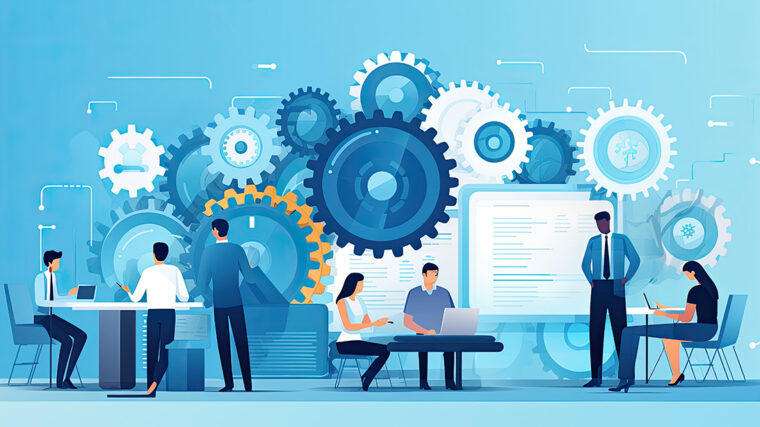
The most successful organizations of the future will be those that integrate people, processes, and technology into one coherent system. Lean provides the philosophy that ties these elements together. Employees become more capable through training and coaching. Processes become more stable and efficient through continuous improvement. Technology enhances visibility and accelerates decision-making.
This integration creates powerful momentum. As teams learn to interpret data, solve problems together, and use digital tools effectively, improvement becomes natural rather than forced. Lean evolves from a set of tools into a living system that grows stronger every day. This evolution supports not only productivity and quality, but also sustainability. By reducing waste, optimizing resources, and increasing predictability, lean contributes directly to the environmental and economic goals that define modern industry. Ultimately, the future of lean is not about choosing between people or technology. It is about recognizing that the greatest impact comes when both are developed in harmony. Lean thinking guides this balance and ensures that progress remains grounded in real value creation.
Conclusion
The future of lean is shaped by the convergence of people, processes, and technology. Lean principles remain essential for creating stable, efficient, and predictable operations, but their role is expanding. As digital tools become more advanced, lean provides the clarity and discipline needed to use technology effectively. As industries become more complex, lean helps teams collaborate, solve problems, and learn continuously. Organizations that embrace this integrated approach will be well-equipped to navigate future challenges. By investing in human capability, building strong processes, and adopting digital tools purposefully, they can unlock the full potential of lean and create systems that are both resilient and innovative. This is the new path forward for lean, and it promises stronger performance, deeper learning, and more sustainable results.